Why Flooring Businesses Outgrow Their First Software
Jun 5
3 min read
Updated: Aug 19
A guide for flooring owners who feel like their software is holding them back
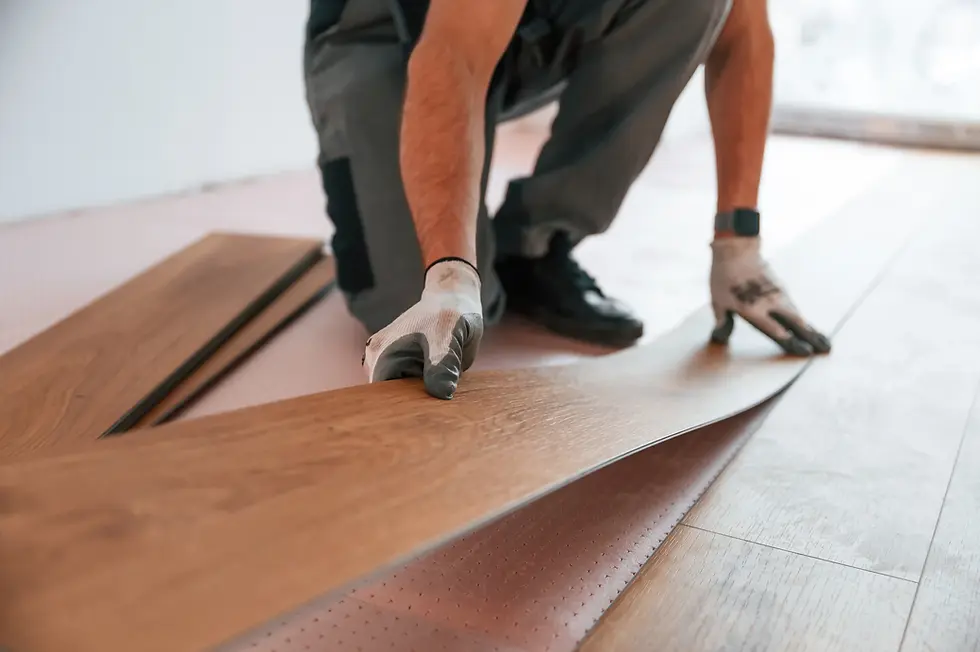
Most flooring businesses don't start with a plan for software. They start with a truck, a crew, and a handful of jobs. The first "system" is usually a mix of a notebook, a shared calendar, and whatever scheduling tool happens to be cheap or familiar at the time. And for a while, that worked.
The problem isn't that you chose the wrong software back then. The problem is that the software you chose was built for the business you were, not the business you've become.
Here's how to tell when you've outgrown it.
Your business changed faster than your software did
When you had two crews and forty jobs a month, almost any tool could keep up. Scheduling fit on a whiteboard. You knew every customer by name. You could carry the whole operation in your head.
Then you grew. More crews. More job types. Retail and commercial. Insurance work. Builders. Suddenly the simple tool that used to feel fast feels like it's fighting you. You're entering the same information in three places. You're texting installers to confirm what the schedule already says. You're rebuilding the same report every Monday because the software won't produce the one you actually need.
That friction isn't a sign you're doing something wrong. It's a sign you've grown past
the tool.
The warning signs you've outgrown your software
A few patterns show up again and again in flooring businesses that have hit the ceiling of their current system:
1. You've built workarounds for everything. Every team has its quiet collection of spreadsheets, sticky notes, and "just text me" habits that exist only because the software can't do something it should. Workarounds feel harmless one at a time. Stacked up, they are your real operating system, and they live in people's heads instead of your software.
2. You're afraid of what happens when a key person leaves. If your scheduler quits and half the operation walks out the door with them, that's not a people problem. It's a sign the knowledge lives in workarounds, not in a system.
3. You can't see your business clearly. You want a straight answer to simple questions: How many jobs are scheduled next week? Which crews are most productive? Where are jobs getting stuck? If pulling that takes an afternoon of exporting and cross-referencing, your software is no longer giving you visibility. It's hiding things from you.
4. Your vendor stopped evolving. You requested a feature a year ago. You followed up. Nothing. Meanwhile the way flooring businesses operate has changed, and your software hasn't moved with it. When a platform stops improving, you don't stand still with it. You fall behind, because your competitors aren't standing still.
Why "good enough" quietly gets expensive

The reason most owners stay too long isn't that they love their software. It's that the cost of staying is invisible and the cost of switching feels enormous.
But the invisible cost is real. Every hour spent re-entering data, chasing confirmations, or rebuilding a report is an hour not spent selling jobs or running crews. Every missed appointment from a scheduling gap is a customer who tells three other people. Every "I don't know, let me check" is a small erosion of how professional your business looks to the people paying you.
Outgrowing your software isn't a failure. It's what success looks like. The businesses that thrive are the ones that recognize the moment and act on it, instead of spending another two years apologizing for a tool that can't keep up.
What "fits" actually looks like
➤ The right software for a growing flooring business does a few things the first system never could. It maintains a single source of truth, so a job entered once shows up everywhere it needs to. It connects the work, from the first lead through scheduling, installation, communication, and payment, so nothing falls through the cracks between tools. And it keeps evolving, because the company behind it is still listening to the people doing the actual work.
➤ That’s the real test. Not “does this software have more features,” but “does this software fit the business I’m running now and the one I’m trying to build?”
➤ If the honest answer is no, you haven’t failed. You’ve just outgrown your first software, the same way every growing business eventually does.
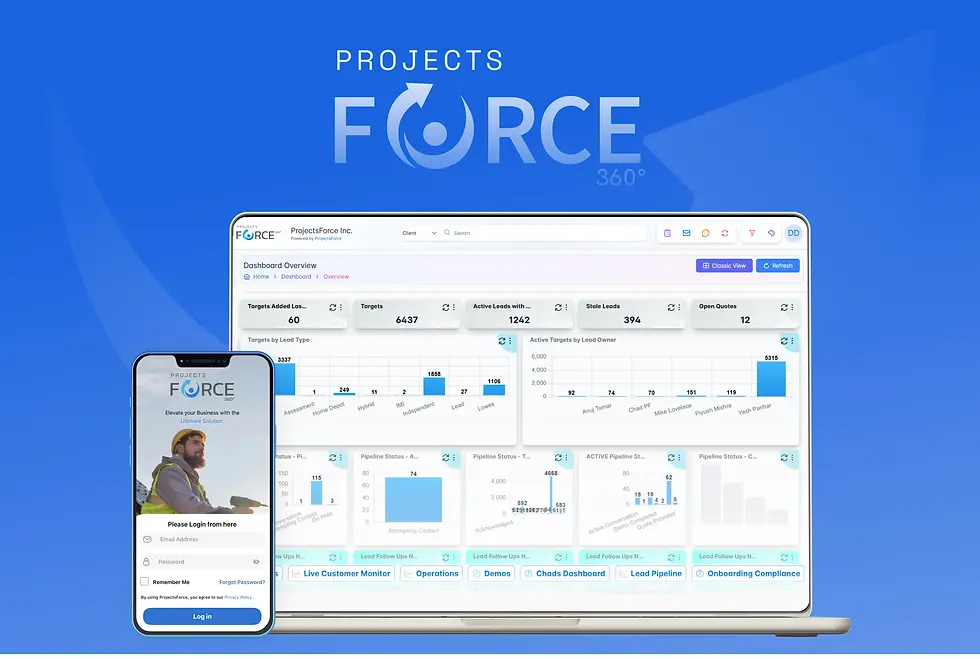
ProjectsForce 360° is the modern operating system for flooring and installation businesses, built with flooring owners and designed to grow with you.


Comments